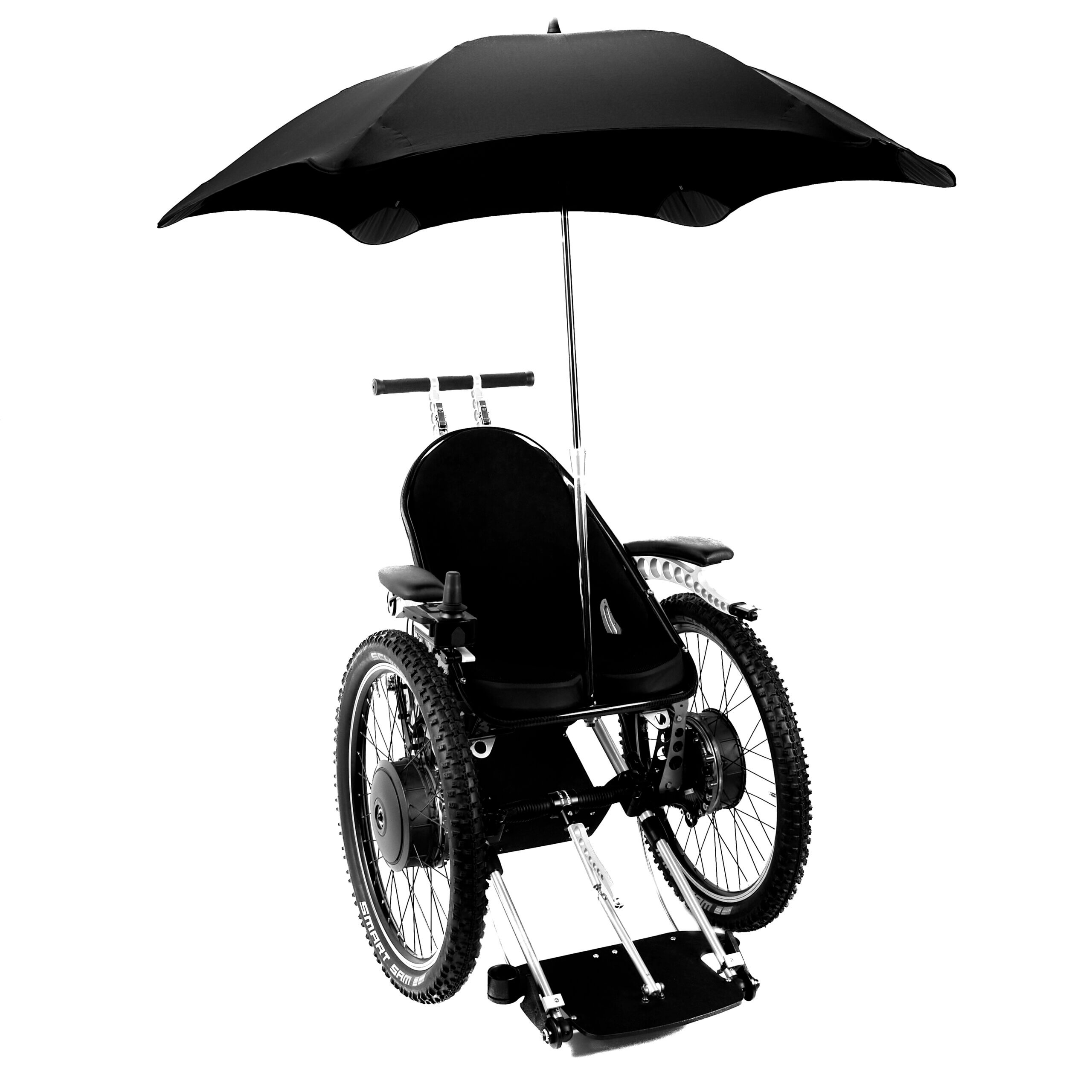
One of the first things people tend to notice about the Trekinetic K2 and GTE wheelchairs, is the rather unique carbon fibre seat. This is very different to almost every other wheelchair out there and there’s a couple of good reasons for this. But before we get into that, a bit about automobiles.
In the old days, cars had a tubular steel frame. The body, engine and wheels were bolted on to this frame that was called the chassis and the body of the car was attached on top. This was strong and relatively cheap to produce but made cars quite heavy.
Then in 1960’s, a racing car designer named Colin Chapman realised if he could make the body strong enough, he could bolt everything to that and discard the frame chassis, making the vehicle much lighter and therefore quicker. Colin and Lotus introduced the world to the first fully stressed monocoque chassis in 1962 and in the hands of driver, Jim Clark, F1’s first aluminium monocoque took 14 World Championship grand prix wins and the 1963 World Championship title. What Lotus had done was revolutionary but it was McLaren’s daring move to make it with an extremely strong, super lightweight material called carbon fibre 20 years later that made F1 cars truly light, faster and safer. The monocoque chassis can now be found on most modern vehicles, from SUVs and boats to planes and even Space X’s Falcon rockets.
Inspired by what Lotus and McLaren had done, we realised that if we made our seat out of carbon fibre, two things could happen.
- We could get rid of the metal chassis by attaching all the mounting hardware directly to the seat, making the chair lighter and stronger.
- We could mould the inside of the seat to follow the curves of the human body to make a more comfortable seat.
Attaching everything to the carbon fibre seat made complete sense to us and is the main reason our GTE Powerchair weighs in at just 34kg, rather than 150kg+ which is typical for most powerchairs, even without any off road capabilities.
Getting the seat shape right was a lot harder and it meant a complicated moulding process and huge tooling investment. The picture above is from our technical file and shows the virtual monocoque seat rendered on a CAD program in 3D using millions of individual reference points. Think of it as the worlds worst join the dots puzzle! At this stage, the computer image is covered with a mirror effect surface which we used to identify any bumps or imperfections in the seat’s surface.
The result is an incredibly comfortable seat that provides more support with less padding than conventional seating systems. It is probably the most surprising thing about our chair, because people are always apprehensive about whether it will work for them until they try it! Today, our unique carbon fibre seat is available in two sizes, 16″ (40cm) and 19″ (48cm), although we also provide many add-ons including cushions, lateral supports, side supports, etc. to accommodate more complex cases.
As always, we recommend that you try our chairs before making up your mind so if you’d like to give one a spin, please jump on our book a demo page and we’ll put you in contact with a local dealer to arrange an assessment.